old salut!

Colin Randall wrote here on France, things Anglo-French and more......but has moved

April 16, 2007

Coming off fence, causing offence

Tomorrow is the day I have decided upon. None of the 12 French presidential candidates is shaking in his or her boots, no sleep is being lost and no votes depend upon it.

But I live in France, occupy my corner of an Anglo-French family and pay my taxes here. So I have a civic duty to declare my choice.
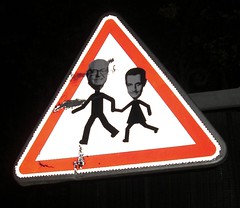
Watch this space tomorrow, if you are interested in knowing for whom my inactive votes are being cast this Sunday and at the playoff on May 6.

I had one of those useful opportunities at the weekend to view the issues from the other side of the Channel. The company I kept was intelligent and lively, and everyone knew there was actually an election in progress.

But the only people mentioned by name, without my prompting, were Nicolas Sarkozy and Jean-Marie Le Pen. Very well, someone may also have thrown a Ségolène or a Royal fleetingly into the conversation, but not with such interest or passion that I now remember the detail.

French politics rarely matter much back home, except during those intermittent crises - warfare in the past, agricultural policy now.

We are taught to regard the likes of Jacques Chirac as hate figures. The French, it is said and not only on www.****france.com, are driven by self-interest, arrogance and pride and by nothing else.

But even this is little more than a pantomime sideshow. For we are told by bonker English columnists that what this country really needs is a good walloping. And that only Sarko can administer it, with his pro reform, pro free market, pro Modèle Anglo-Saxon policies taking the role played by the martinets that once hung from hooks in French kitchens.

Those pundits probably do not know how little their views mean to him. But just as surely as Sarko has already watered down his promise to achieve "rupture" with the past and its failures, the truth is that he'll end up being very wary about doing very much at all that would suit the lovely-country-shame-about-the-people mob, the racaille of the English Right.

I did not mean to be so cruel on my confrères. If I use racaille, a contentious word that has brought Sarko much grief since he chose it to describe delinquents on suburban estates, I mean it in its broader sense of "rabble".

Most English language reporters prefer the harsher definition "scum" and may even be right (the only deciding factor, of course, being how the person on the receiving end interprets the word).

But how much interest is there generally in Britain in this political contest? Given that it's been a pretty drab campaign, I suspect that the answer reflects my exchanges when back home: Not Much.

Perhaps things will become more animated once 10 hopefuls have been cast out of the race, leaving us our top two playoff.

The tragedy is that the elimination of the also-rans is pretty certain also to entail the elimination of all the true characters of this campaign.

Labels: , , , , , , ,

April 06, 2007

Not fit for public view

A friend recalls the utter embarrassment she felt when, during Cambridge undergraduate days, her parents arrived to see her one weekend, dressed in matching shell suits.

Although I have never met the parents, and am sure they are perfect in every other sense, it is difficult to imagine the scene without wincing.

And the scene always comes flooding into mind when I go to the supermarket in France.

Lurking around the corner of each alley, ahead of you whichever caisse you choose and all over the car park, there are men - especially men - in the French equivalent.

They are not always glossy, as I rightly or wrongly assume shell suits must be, so are probably closer to being track suits. Invariably, in recent years, the trouser bottoms will be cut short to add a hint of fashion consciousness.

But if they look like track suits, you know that their wearers - six times out of 10 - have almost certainly indulged in no sporting activity for years. There is something especially bizarre about this mode of dress when it is adopted by the elderly or obese.

Appearances may be deceptive, of course. There is, after all, a bit of pot calling kettle black going on here.

No one has ever mistaken me for a style guru. My wife once wrote to Hilary Alexander's fashion agony aunt column asking how she could transform me, from whatever kind of northern oik slob I am, into an ultra-smart and trendy Parisian.

Hilary promised a reply, or to deal with it in her column. But she clearly knew me well enough to be able to decide that I was beyond redemption and quietly forgot all about it.

Nor can I claim to be superfit.

I make an effort, playing badminton, using one of those Décathlon abdominals frames and walking a lot.

Each morning I am sent out to buy the baguette and Var Matin, an easy walk down the hill to Intermarché but a tough old slog back up.

To bypass the endless winding bends leading eventually to our house, I clamber up a steep grassy slope and then tackle the 139-step short cut. Lame dogs pass by with scornful looks and, if I have missed a couple of days, I am certain to be briefly out of breath by the time I reach the top.

It feels good later, though. As does the muscular pain the morning after I've played, say, seven or eight hard games of badminton singles.

But I promise my fellow early-morning shoppers, all the lame dogs of the Var and my badminton opponents that they will never be required to cast eyes on me in a cutaway track suit.

Labels: , , , , , , , , , ,

March 30, 2007

Competition time (3)

The competition has proved a jolly enough distraction and made it a good deal easier to keep Salut! active during my week in London.

There is still time to enter. As one of those who has already done so said to me, finding the answer to the question I set does not require a huge amount of research.

I will announce the results next week. The competition closes at 6.30pm French time on Wednesday and I will make a random selection from the correct responses received at colinrandall2001@yahoo.fr by then.

The encouraging trickle of replies reminds me of a short period at that Other Place when I offered prizes linked to my journalistic sideline of writing about folk music.

On the first occasion, I rather optimistically made the question harder than was wise for a mainstream publication: name each of the women who, up to that point, had served the Irish band De Dannan as lead singer.


I think there were only four replies. One reached me from within the newspaper office where I worked, two arrived in identical writing on postcards sent from the same town and the fourth collected the prize.

This was before the internet age, which has pretty much removed the slog from finding the right (and yes, sometimes wrong) answers to most questions.

So for my next little contest, I posed a relatively simple Fairport Convention question (which member of the original line-up was still in the band?) and the letters and cards flooded in.

Consider the hurdles. You had to buy the paper, open the section, locate the small listings item mentioning Fairport, read it, know the answer, care a jot about the prizes (four pairs of tickets for the band's annual Cropredy festival), bother to reply.

About 150 did. It seems a small number given the circulation of the paper at the time - well over a million - until you look at hoops listed above.

I wish to this day that I had not been pompous enough to disqualify the wag who said he was replying only because he was sure there couldn't be three other Fairport fans among the Telegraph readership.

You'd need to do a lot worse than that to be thrown out of Salut!'s competition.

Labels: , , ,

March 29, 2007

Competition time (1)

Can it really be so?

From the long, dark nights of fevered imagination to the contented glow of a man who has got something right.

Today, tomorrow or very soon, Salut! will reach a significant milestone: 50,000 hits.

Having just attended a seminar at the London School of Economics on how journalists can make the web pay - in short they probably can't was the message I sort of received - I know all about page impressions and uniques.

But while I readily confess to not knowing how many individuals have visited this site since its creation last October, I can also tell you that we have already passed the 50,000 mark for visits (even if that is two people making 25,000 each).

Hundreds if not thousands of people had already been here before I set up the counter that you see somewhere down the right hand column.

It often strikes me as a little hard to accept that Salut! has not attained any ranking in the only blogger chart I have come across, the Technoranki one.

I swear I even saw a couple of oddball sex sites creep in towards the bottom of that hit parade for a week or two. But no sign of Salut!, and no way of knowing - since Technoranki jealously guards the secrets of its trade - what I need to do to make my breakthrough.

Nevertheless, the fact remains that I have been given massive public support in the small, income-free corner of the web that is this site.

My hope is that it will get better still, though that is likely to necessitate a move to new accommodation quite soon, and that more people will be attracted.

But as a mark of my appreciation of your support - whether as readers or readers leaving comments - I offer a small commemorative prize.

To qualify, all you need to do is trawl through my blogging history - here and/or at the Telegraph - and tell me the name of my ungovernable (thanks, John M) French cat BY E-MAIL PLEASE TO

colinrandall2001@yahoo.fr

PLEASE DO NOT POST THE REPLY AS A COMMENT ON SALUT!
The prize - perhaps even prizes....let us see - will relate to my interests, well documented here, in food and/or France. Arbitrary rules will apply*.

* The closing date is 1800hrs French time on Wed April 3. Winner or winners will be drawn from the correct replies received by then........

Labels: , , , , ,

March 25, 2007

No show

It was not the start of a foreign trip, as today is (a visit to the UK being a foreign one if you live in France), when you would be rather foolish not to have a passport to hand.

It was dinner along the coast in Cavalaire* and, with the most effusive of apologies, we were turned away.

The way I look? A failure to observe a basic smart-casual dress code? Muttered threats about "this better be good at 38 euros a head"?

No, Mme Randall simply wasn't able to produce ID, and the dinner - one of those sad themed spectacles I am known to attend, this one Brazilian - happened to be taking place in a casino.

Casinos are places of no interest to me. Yes, I did the pools and yes, I still have a punt on the lottery. But not since the days of the Spanish City have I so much as bothered an amusement arcade.

So I had no idea that the law obliges anyone entering such premises in France to have official photo ID. I had mine; my wife had dressed to the nines and was carrying a skimpy little handbag with room for virtually nothing.

No amount of pleading, pointing to my wife's name in the next-of-kin bit of my passport or appeals to reason made the least difference. "Honestly, we only want to eat and watch the show," we said. "We don't want to gamble the night away."

The two jobsworths were polite but unmoved. The law's the law, they said. So we ate at one of our favourite restaurants in Le Lavandou instead.

Everyone more or less knows that you are officially obliged to carry ID in France, so this must be a cautionary tale, not a whinge. It's just that you don't expect to be asked for it when you pop out for a meal. I bet the show was rubbish anyway.

Visits to the blog may be sporadic over the next few days......

* Not Cavaliere as first mentioned, one letter different and maybe 7 or 8 miles apart....and too small to have a casino.

Labels: , , , , , , ,

March 21, 2007

And the dividend forecast is.........


"Don't tell anyone," said my mother in little more than a whisper as she sent us off to Sunday school. "But we may be rich."

By the time (later that day, Monday at the latest) we knew we were not rich at all, we'd told everyone, starting within minutes of that parental plea for discretion.

Dad had won the football pools, or rather he and three people from work had won shares of a full dividend. In a town like ours (Shildon, Co Durham) a pools win was guaranteed to change lives quite dramatically, split four ways or not.

The only trouble was that everyone else, and everyone else's syndicate, seemed to win that Saturday. So many draws had been played out on the football grounds of the nation that his ultimate fortune was four into 32, not four into a million.

This tragic childhood memory came back for some reason while I was watching a French quiz show called Le Mur.

Inevitably, it is an imported idea, probably from America, and it involves one contestant battling against a wall of 100 rivals, arranged in groups according to employment or interests (les Bikers, for example, les Beatles -impersonators, that is - or les Gymnastes).

There is a succession of general knowledge questions, with the correct answer given in each case among three choices. The individual player can climb towards 200,000 euros, eliminating members of the wall as he or she goes along whenever they, responding to the same question, press the wrong button.

I can imagine it would seem ghastly on American or even British TV, but it somehow works, at least for me, in French.

This is partly because its success requires a lot of people to behave inanely with football-style chanting, cheers and boos and one of the things I like about the French is that they never mind making fools of themselves provided they have fun doing so.

Even the fact that Mme Randall rather fancies the presenter, Benjamin Castaldi, grandson of a one-time French golden couple of film Simone Signoret and (adoptively) Yves Montand, fails to put me off. And when a stout ambulancewoman called Catherine won the top prize after a brilliant performance, I was as chuffed as if I'd won it myself.

I realise that even 200,000 euros - especially since, if I understand the rules correctly, half goes to a participating viewer - is not the stuff of serious wealth. Most of us would see it as a pretty tidy sum, however.

But it must have been that sharing element of the game that put me in mind of the day I thought I belonged to a pools-rich family. Dad was sharing his winnings with others, and the total jackpot was in turn being divided among thousands.

Despite this early gambling setback, I became a regular pools punter. It took me not merely years but decades to win my own first dividend on the pools.

In Le Mur fashion, you may guess where I was when I discovered the extent of my windfall:

a) Doorstepping Jeremy Thorpe in north Devon

b) Watching Sunderland Reserves, away

c) In Colditz Castle


Et la bonne réponse - after plenty of drum rolls, gasps, impertinent chanting from the wall - est la réponse C. I had been reporting on an old comrades' reunion and had just finished dictating my carefully constructed story from a phone deep inside the castle.

"Never mind your story," barked Richard Savill, a friend sitting in the office back in London and in need of urgent clarification from the organiser of the newsroom pools syndicate. "Was it Vernons or Littlewoods?"

Happily it was Littlewoods, and instead of something like my dad's long-ago £32 being split 19 ways among colleagues (Vernons was cheaper to play, and accordingly meaner with its prizes), we had £5,700 between us - or £300 each.


Spend, Spend, Spend
? Not quite. Enough to pay a car repair bill here, a holiday deposit there, and better than a kick in the teeth. But take it from me, it hardly changed our lives.

Labels: , , , , , , , ,

March 19, 2007

A sense of Libération from making ends meet

Fifteen years ago, I was sent back north by my news editor to write about a certain football team.

The team had made it to the FA Cup final from what the French rightly still call the Second Division, whatever word games the football authorities play to make it sound better.

It was the players' "open day" with the press and I think my masters vaguely expected to see a story about grasping footballers demanding money for their monosyllabic thoughts and posed pictures.


Nothing of the sort happened.

As we strolled around the pitch at Roker Park, no one was out of bounds (though the better players did have queues waiting to speak to them) and nearly everyone was friendly and polite.

Since this was my team, I was happy that the club and its players were behaving impeccably - and I hope that having given their time freely, they went on to make a little from follow-up exclusives with the press and broadcasters.

Only one person, so far as I know, asked for money and that was a sports journalist who felt too grand to give a few comments to a TV crew without payment.
His request, which ensured that no interview took place, surprised me.

I have always been willing to give minor bits of help to my confrères and consoeurs on the basis that I would hope for and expect the same in return. If money is offered, as it sometimes is for radio or TV slots, that is a different matter and I am not stupid enough to refuse.

But I also remember the football hack saying something about being a freelance and that they were therefore asking for his professional services and time for nothing.

That is how it is for me in my new, changed life.

A friend asked the other day if I'd be interest in writing a weekly blog posting on the French elections for the Libération website site. "Of course," I replied, "every little helps."

I have a soft spot for Libé and was delighted when it came through its recent crisis with hopes of survival higher than for some time.

But when they got round to ringing to explain the details, they added that while they wanted the contributions, they would not be paying for them.

If I had still been working as a salaried correspondent, I might well have said yes, provided I felt I had the time to do the blog justice.

Had they offered a pittance or, say, a year's subscription, I suspect the answer would still have been yes. As a freelance, chasing whatever earnings I can, I had no hestitation in turning down the idea of adding to my workload but not my income.

Perhaps the person calling me does her job for nothing. I doubt it. Perhaps the exceedingly rich people who hold the purse strings at Libé also conduct their business lives without the least desire for remuneration. I doubt that, too.

Given the paper's links to Sartre and the Paris Spring of 1968, it is not surprising that for a long time it operated a policy of paying everyone from the cleaners to the editor the same.

Later, it dropped this lofty egalitarianism and entered the harsher world of the market economy. In 2007, I would probably have settled for the cleaner's pay.

A charming lady journalist who plans to write about me in a magazine about British expats in France told me of her dismay on being told by another UK journalist that s/he would not be interviewed for free.

Her shock was clearly genuine, and I was perfectly happy when I found I had time during a visit to Paris to meet her and answer her questions. But I was just as shocked by the suggestion that a Left-of-centre, up-the-workers kind of paper should want someone to turn in a few shifts for nowt.

Labels: , , , , , ,

March 12, 2007

All right, Jacques?


Jacques Chirac was a neighbour in Paris. He remains an occasional one in the Var for the last weeks of his present job, since it has the perk of a holiday home down the road.

Though we choose not to live in each other's pockets, we have met twice - perhaps leaving the bigger impact on my memory - and I have observed him often enough to know I am not, at such times, in the presence of a monster.

My wife, in common with many French women, likes him. Her mother adored him and, I imagine, would have continued to do so had she not died before he became president.

But if you are British, and especially if you are English, Jacques Chirac is - or is meant to be - a hate figure.

This is expressed in more ways than the one chosen by a former editor of the Sun whose contribution to the entente cordiale was to dispatch a posse of Page 3 girls to the Champs Elysées, armed with a limited-issue edition of that day's paper, with Chirac depicted on the front as a worm.

Forget for a moment the inconvenient detail that, in Paris, to be likened to a worm will cause more bemusement than anything else (as my consoeur Agnès Poirier has pointed out in one of her books, Les Nouveaux Anglais, the term doesn't exist as an insult in French).

The gesture still reflected a view of the French president held pretty widely on the Sun's side of the Channel and the vulgar gimmickry of the tabloids has its equivalent in higher-minded journalistic circles.

Someone at that Other Place once inserted a word I had not used so that a piece written in the run-up to France's referendum on the EU constitution in 2005 declared that recent polls had confirmed the president's "worst fears that the electorate may use the referendum to register its disgust with him, his government and its lot in life".

I was cross at the time, not just because a colleague wishing to change copy in such a significant way should at least have the courtesy to mention his or her intentions in advance, but because the change introduced a word I considered far too harsh to describe the true nature of France's relationship with Chirac.

My own phrase had been "broader disapproval" and I might, on reflection, have chosen something stronger.

But disgust, while undoubtedly felt by an essentially partisan portion if the French electorate, was surely over the top and, in the specific case, much more accurately a reflection of what a middle-class Englishman of a certain political disposition believed.

Someone responding to one of my articles for the Guardian's Comment is Free web pages mocked Chirac's theory that it was more important to get on with governing France than satisfy media and political demands to end the guessing about his own future.


Picture: coombskj


A lot of French people I speak to would agree with that (French, I assume) person's criticism of his record in office, yet it is also commonplace to hear words of genuine admiration for the way he represents their country on the international stage.

But leave to one side his stand on Iraq and Chirac departs from the presidency having failed to make much impact on any of the important issues facing France. That puts into perpective all the attempts he has made during the dying months of his mandate to improve history's judgment on the Elysée years of his long career.

One former confidant, Franz-Olivier Giesbert, wrote in a scathing book last year that Chirac's career, which once promised a great deal, had ended up as "a personal tragedy that has become, in the end, a national tragedy".

This morning, more than one French commentator assessing last night's broadcast from the Elysée observed that here was a politician who was invariably stronger on analysis than on delivery, on words not actions.

Perhaps in the end, Chirac's failure was that no one was ever quite sure what he stood for, or whether what he stood for now was the same as what he stood for a little earlier.

He proved changeable on Europe and America, on the need to drive home reform in France; he opposed war in Iraq and loved to present himself as utterly committed to peace but was pig-headedly determined, as one of the first big decisions of his presidency, to try out his own nuclear weapons in the Pacific. He could be both a charmer, as I certainly found, and a bully (as Blair did).

If being detested by the American or English Right (or, for sure, the far Right of Le Pen) doesn't make him a bad person, Le Figaro could not help noting that he wasn't, at heart, a creature of the French Right either.

Much attention has been paid to his refusal to endorse Nicolas Sarkozy in the broadcast (he may, of course, do so later with whatever enthusiasm).

But I was left rather more intrigued by his reference to moving on from the presidency to serve France and the French in some other way. What can he possibly have in mind?

Labels: , , , , , , , , , , ,

March 08, 2007

Almost French


......is the title of one of the most engaging books on France, and especially on living in France, that I have come across since making my own move three years ago.

Almost French was written by Sarah Turnbull, an Australian who left Sydney with carefully considered plans to write about the change sweeping eastern Europe, but met a Frenchman and settled instead in Paris.


Her book - which Almost Everyone, or at least almost everyone to whom I loaned my copy, liked - was excellent on personal relationships, and above all on the business of getting to know the French when you're a foreigner.

It was less good when she decided she wanted to be a travel writer and rattled on at length about favoured corners of Paris. But those passages were easy to skip if you felt as I did.

Two years or more after I finished the book, the pages I remember best are those that dealt with trying to make friends.

Despite the advantage of having a French boyfriend, and ready-made introductions to his circle, she found it a nightmare.

People would give her short shrift at parties, visibly disapprove of her Oz ways and tastes (notably her capacity to drink) and generally make it plain that they were out of bounds as far as closer ties were concerned.

Even though Turnbull's French was self-evidently up to understanding straightforward conversation, she remembers listening in horror as one girl within earshot asked her boyfriend (words to the effect of): "So how's your little Australian coming along with her French?"

A couple of years or so later, the same young woman had at last become a friend. Turnbull quite bluntly asked why she and everyone else had been so horrid at first.

The answer was simple: along the lines of "we make all the friends we want at school, college, maybe very early in our careers....we have no need of any more".

I have good French friends, but these friendships were acquired via my French wife or forged outside France (perhaps requiring the French person to make an effort he/she wouldn't at home), or developed in close working environments.

Those who were particular friends of my wife when she was young put up no barriers that I recall. So in that respect, my experience differed from that of Turnbull. But I do have a clear memory of finding others of lesser acquaintance, and even some in her extended family, very hard work.

And as I have observed before, it can be difficult to make a breakthrough in more casual settings, even when common social activity brings you together.

At the badminton club I have found here in the Var, everyone is pleasant with lots of bonsoirs and à bientôts and bisous.

Between all that, though, they generally peel off to grab a court and stick in the same doubles formation all evening. I may be wrong, but I see it as another aspect of the social phenomenon noted by Turnbull.

What, in this specific example, do more seasoned residents of France advise (naturally forgetting that it's badminton; I am sure the same applies to many kinds of sports or social clubs). And have others, wherever their travels have taken them, come up against anything resembling what either of us describe?

I realise that I can hardly impose le modèle Anglo-Saxon on them, with boards, name tags and orderly, democratic rotation of players.

But how, without coming across as the arrogant expat, do I get them at least to consider the possibility that they'd get an awful lot more out of the club if they treated it, well, like a club and mixed, on court as well as off?

The logical extension of the French way is something I have already experienced (at the distinguished Racing Club de France in Paris): arriving on my own at 8pm, as a player of respectable club level standard and - I hope - of a sociable disposition, and slipping away three quarters of an hour later without the least hint of getting a game.

Labels: , , , , , , ,

March 06, 2007

Serious question

Just when I was thinking two carnivals in a week would suffice for a lifetime, a third came long. And a fourth beckons.

Menton is a fine resort situated just after Monaco ends, going east along the Riviera, but before Italy starts.


Why the words - "shall we go to the La Fête du Citron ?" - even occurred to me, let alone escaped from my lips, I cannot tell.


One answer could be that it gave an excuse for another trip along the coast by rail, this time straying eastwards beyond Nice.


I mustn't prattle on about the joys of taking a train journey on the French Riviera; just do it if you find yourself in the area.


Nor should I attempt to describe La Fête du Citron at undue length. It's not so different from the carnivals of mimosas or whatever, and even the colour wouldn't change much if it were not for the similar abundance of oranges.


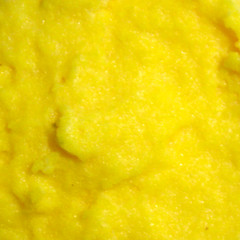
So getting back to the subject I identified in my headline, what exactly is the point of polenta?

It was served with stewed beef as part of an agreeable enough meal at Le Majestic, a brasserie located between the station at Menton and the ticket office where they charged you 14 euros a head to proceed to the promenade and find somewhere to stand and watch the parade.

For the last daytime procession of the carnival, Le Majestic was taking no chances and offered a single set menu - the beef, preceded by an excellent rough pate with, fittingly, lemon tart to finish and a little jug of wine thrown in - for 21 euros.

The ambiance was jolly, helped along by two bibulous couples on a coach trip from Sancerre - "what name do you give your husband's private parts?" one of the messieurs asked at one point.

But no one could quite work out why the beef had to be accompanied by polenta, except that we were so close to Italy.

It just seemed to be slab of nothing, edible but desperately uninteresting and devoid of taste unless you smothered it in the sauce from the meat.

That blogging standby Wikipedia describes it thus:
Many new recipes have given new life to an item which is, in essence, a fairly bland and common food, invigorating it with various cheeses or tomato sauces.

But giving something that has no taste "new life" by adding cheese or tomato is surely like making the phone book sound great by getting a wonderful singer to warble extracts from J or K. Or have I missed something?

The last of my carnivals is this Sunday and the good news is that it's in Le Lavandou. I'll eat at home.

Labels: , , , , , , , , , ,

March 01, 2007

Piaf: mômentous moineau

Even someone with my minority tastes in music can see that a failure to be moved by Edith Piaf should be treated as evidence of a heart of stone.


Picture: idealterna


La Môme, a sketchy but endearing film of her life, has been out for a couple of weeks in France and is doing great business.

A first attempt to see it, in the cinematic backwater of La Londes-les-Maures, ended in disappointment. If we were among no more than five customers watching Mel Gibson's Apocalypto a month earlier, we couldn't get anywhere a seat for La Môme despite arriving half an hour before it started.

So to neighbouring Hyères yesterday.

Bookings by phone or internet are not allowed and it's a pain to drive all the way there and back without being sure, so we took the sad senior citizen option and turned up in good time for the 4.45pm screening at the Olbia.

A man some way to my right snored gently, and I couldn't help noticing that a young woman, who arrived in a short skirt and sat nearby, left at the end wearing jeans.

But whatever drove him to his slumber, and her to seize an opportunity to change, I was hooked from the opening sequence showing Piaf as a grubby Parisian street urchin.

The plot darted this way and that through a life of glorious tragedy, her downfall predetermined by lifelong attachment to the bottle and eventually addiction to drugs.


I am sure it must barely have scraped at the surface, and the zig-zagging chronology was liable to induce dizziness.

For the purposes of the soundtrack, the voice was not always that of Piaf, but of Jil Aigrot.

In the end, however, I was convinced that the right artistic decisions had been taken and that Olivier Dahan had made a film of enormous merit with Marion Cotillard, utterly compelling in the title role, capturing Piaf's insecurity and awkwardness as well as the defiant spirit.

It probably won't get beyond the art house circuit in Britain or America. But what marvellous respite it offers from the French presidential elections, even if not everyone agrees with me and Gigi is destined to walk out in disgust at the early demise of her beloved Gérard Depardieu.

Labels: , , , , , , ,

February 23, 2007

Over the top? C'est la totale

News reports in France sometimes recount allegations, usually but not always from outside, that the French are "champions" at this (taking time off, consumption of pills, being prone to complain) or mauvaises élèves at that (learning languages, courtesy on the road and so on).

You don't need to be excessively francophile to doubt the accuracy of the claims in the first place.

But can I raise another possible contender? Are people of other countries as given to hyperbole, in everyday conversation, as the French?

When I first arrived in Paris as a new resident back in July 2004, I described my wife's way of combining comprehensive knowledge of English swearwords with a total failure to moderate their use according to strength of curse each situation warranted.

This is not just to do with the occasional domestic dispute that would arise in any household a chic, vivacious and tidy-minded Frenchwoman shares with a dishevelled, football-supporting folkie.

It is simply the case that whenever she swears in English, she starts pretty high up the range.

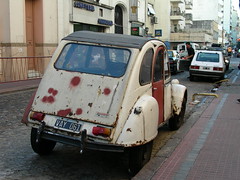
Her sister is one of the most mild-mannered people I know, but was a nightmare to be with when she first started driving, berating just about every other road user with a non-stop flow of shouts and insults from the inside of her Citroën 2CV.

I suppose encounters on the road don't count so much, and I am certainly not sure that French road rage is worse than the British version.

But I have witnessed countless examples of the phenomenon, from the fonctionnaire's utter exasperation at the omission of some piddling detail from a form to the platform attendant's unrestrained abuse aimed at some late-arriving passenger.

A slight nip in the air and it's inevitably "freezing". A minor lapse in manners at the table and papa launches into a tirade, with or without accompanying claques, as if a line of cocaine had tumbled from his child's pocket.

On today's lunchtime news, a little girl on a school ski-ing holiday was interviewed as she lay in bed while her friends enjoyed the snow.

She seemed a long way from death's door, but complained of stomach ache, headache and nausea before adding gravely: "C'est la totale."

Her phrase enriched my knowledge of French - a function, I suppose, of not having children living at home to keep me in touch with their everyday use of the language.

But was her reaction to minor ailments just another isolated instance, no more characteristic of the French than the stiff upper lip is of the English? Or does experience lead others to believe the French are les champions of exaggeration?
Labels: , , , ,

February 21, 2007

Driving a Renaud to London

However many records and concert tickets Renaud shifts in his native country, he is never likely to be mobbed in Oxford Steet.


Picture: buzfoto

The guarantee that he can go about his daily business unhindered when in London has a lot to do with his decision, which Richard of Orléans will think makes him positively certifiable, to plan his future there.

We have talked quite a bit here, and in that Other Place, about the two-way flow of people between France and the UK.

Truly reliable figures seem elusive, but I think there are supposed to be around 500,000 Britons with homes in France - which many undoubtedly use for only part of the year - and perhaps 300,000 French people resident on the other side of the Channel.

Renaud's explanation, in a Paris Match interview, for deciding to move to London involves a list of qualities that some of my readers will consider as unrecognisable as he is to the average London cabbie.

"It is true that Romane (his wife and mother of their baby son Malone) adore London," he began, uncontroversially enough. "Romane, above all since she is an artiste, finds the attention of people in the street hard to take - their curiosity and fanaticism, and the amateur paparazzi with their mobile phones. Ten times more peaceful in London."

Avert your eyes, Richard. Our hero goes on to describe his love for the capital, the good citizenship of its people, their humour, the pubs.

"I love English football, English rock, English culture, English literature, the galleries, exhibitions, architecture. You don't see cops on the streets of London. Why? Because there is more civisme and more brotherliness than in Paris!"

And no, Renaud is not thinking - Johnny Hallyday style - of a more agreeable tax regime.

As a good socialist - and not even what the French like to call a caviar socialist - he insists that the more tax he pays, the happier he is, and that France's wealth tax, the ISF, is to him a gesture of solidarity.

He and Romane plan to devote most of their time, when not working, to living in London, maybe eight months a year.

They already own a small house there - "not a mansion, not a palace, honest!" - and want Malone to grow up bilingual, attending school in London (by which they may, of course, mean the Lycée Français in the Little France manor of South Ken rather than a bog standard comprehensive).

Adopting his most Ségo-like posture, Renaud adds: "I will go on paying my taxes in France even if I regret that they go on building aircraft carriers instead of crèche, schools....."

Who was it, apart from me now and again, that said French pop music doesn't travel?

Labels: , , , , , , , , , , , ,

February 20, 2007

Ségo: it's tough being a woman

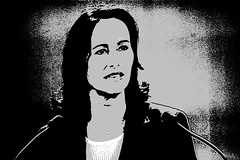
However you look at it, Ségolène Royal's television audience - a peak of just under 10.6 million viewers, an average of 8.9 million - proves she is a remarkable draw.
The average was comfortably higher than the ratings for her rival Nicolas Sarkozy's similar broadcast, itself described as a record for a political programme in France, two weeks ago.

Many people will have tuned in expecting, a lot of them hoping, to see Ségo stumble and fall. But she will take huge comfort from the figures, believing the massive penetration will help her rise above media, opposition and even Left Bank intellectual disdain.

Some will remember mention here of her steeliness and ambition being seen as faults, whereas in a man they'd be hailed as virtues.

This notion surfaced again the other day when she reacted sharply to questions about the abrupt resignation, allegedly over funding of her programme, of an economic adviser.

It was certainly an eyebrow-raising moment, and poor PR, but the writer of one column I saw couldn't resist adding that she was too quick to reveal herself as hard. Sarko seems to get off much more lightly when he makes ill-considered ripostes.

Last night, she argued that running for the presidency was harder for a woman, that no man would have had his competence questioned as constantly as has happened to her.

It was a long programme but I felt Royal did reasonably well after a ponderous start (not her fault; the first questioner was allowed to ramble for ever).

She made the right noises (for the left, so to speak) on youth unemployment, pensions, small businesses and the disabled. And she refused to be wrong-footed by questions about the Parti Socialiste "elephants", not least what role if any she would hand as President Royal to her partner François Hollande, the general secretary.

The moment when she walked over to console a wheelchair-bound man, in tears as he described living with MS, could have been embarrassing but wasn't. It looked a genuine gesture, but I suspect it will also have done her no harm.

I found her a little less assured on the presidency itself - "I think I am ready" hardly had the ring of confidence - and on that thorny issue of how she will pay for her programme. But Sarko has unanswered questions in that area, too.

François Bayrou, the centrist candidate who has been steadily improving his showing in the polls, is an interesting sideshow. I simply do not believe the poll that found he would beat either Ségo or Sarko if he made it through to the second round, but he is capable of inflicting damage, especially on her.

Royal's best bet, provided she can finally sort out her unimpressive campaign team, is that those 10.59 million viewers - isn't that 10,589,000 more than are canvassed in the average poll? - liked not only what they saw, which is usually the case, but what they heard, too.

Labels: , , , , , , , , , , ,

February 16, 2007

Pottering about in the Guardian

First a few words of reassurance. My appearances elsewhere in cyberspace do not mean that Salut!'s days are numbered, or not yet at any rate. Especially since I now see that my advertising earnings have crept up to an average of 17 cents a day.


Picture: Si1very


But regulars around these parts may be interested to learn that I have found one or two other journalistic outlets to satisfy myself that, all that "garden leave" now over, there is indeed life beyond the Telegraph.

The First Post, a newsy site which already appears to be a home for other former colleagues, has already run a few articles.

There have been two or three on the presidential elections, naturally, but also one apiece on the French smoking ban and a couple of villas that Saddam Hussein's regime bought in the south of France with money that, arguably, could have been better spent in Iraq.

As of tonight, I am also a contributor to CommentIsFree, a talkative and animated corner of the Guardian's website. Ségolène's continuing struggles preoccupied me today, but my hope is to broaden the range of topics much as I try to do here. That link now seems to work.

At my leaving party - sorry, one of my leaving parties, this one in the Cheshire Cheese pub off Fleet Street - I began by condemning my former employers for their cruel and vindictive decision to give me more time to spend with Sunderland football club.

Those with my best interests at heart will be relieved to hear that I have found something more thoughtful than Salut!'s football offshoot to help occupy my time.

Labels: , , , , , , , , ,

February 15, 2007

Fine mess

Freedom of the press and all that - a great subject, and all the traffic coming this way in recent days implies that others think the same. One to return to, but perhaps it's time to move on.

Heavy, dark skies greeted me as I flew into Stansted the other afternoon. It felt three or four hours later than it was, and you got very wet walking from aircraft to terminal building.

If the south of France needed something to make it seem more attractive, that Essex welcome would have done the trick.

The welcome was to become bleaker. Awaiting me in London - one of my daughters had collected a stack of mail sent to our old home since the Post Office redirection time limit expired - were three letters from bailiffs.

A parking fine I never knew a thing about had naturally gone unpaid. The bailiffs were making bailiff-like threatening noises about what was likely to happen as a consequence.

Worse, these letters began in August, 2006 and ended in October. In that time, a parking fine that may have been - and this is a guess - £30 or £40 had turned itself into a debt of £235.

And the figure was still growing. When I was finally able to speak to the bailiffs next morning, I was informed that the sum outstanding now stood at just under £320.

What happens next is unclear. I have lodged an appeal on the grounds that no ticket was left on my car windscreen on the day back in February last year when, in a grim part of Birmingham, I had parked while attending Birmingham City vs Sunderland. I also had no idea I was illegally parked, but that is another issue.

A good case could be made out for penalising someone daft enough to spend good money travelling from France to spend an afternoon in the West Midlands, endure the worst food he can remember eating in a decade and then watch his hopeless, relegation-bound team produce a typically inept performance.

But I still reckon the cost of that day out, now racing past £500 (taking the cost of match tickets and travel into account) unless the appeal melts hearts, was steep.

And the burden is unlikely to be offset by the revenue Salut! enjoys from the Google click-and-earn ads (I think the income currently averages 11 US cents a day). Thanks for the bright ideas on how to illustrate this post - and to Alex Segre, a professional photographer, for allowing me to use his work.

Labels: , , , , ,

February 12, 2007

No offence (3)

On a chilly evening in Le Lavandou, we dined alone at L'Auberge Provençale. There were no other customers, the empty tables making a mockery of the owners’ efforts to create a bright, welcoming ambiance.


The meal – we both chose from a set menu, with rougets as starter followed by magret de canard – was simple but excellent, with a pleasant bottle of Provençal red, from the Domaine de l'Angueiroun just three miles away, to accompany it.

Every attempt was made to make us feel comfortable; the first question when we booked was whether we’d like to sit by the log fire. The bill – 79 euros, which also included a bottle of Evian and a shared dessert – was reasonable enough to send us away satisfied that we'd had value for money.

The owners would be pleased with the above words. If this blog were widely read in Le Lavandou, they might even print them out and stick them on the wall, though it would mar the decor.

But what if our experience of L'Auberge Provençale hadn’t seemed so good? What if the mullet had tasted rubbery and the duck slices been so hard you could have bounced them on the table, unconcerned about the risk of knocking over the wine bottle, so awful were its contents?

Would I be as entitled to say as much, in a newspaper or magazine or on line, as I clearly was to report more favourably?

Does anyone seriously believe the answer to that question is other than Yes?

Sadly, a jury of good men (and women) and true in Northern Ireland saw things a little differently. They have just awarded £25,000 in damages, plus m’learned friends’ costs, against the Irish News after a restaurateur complained that a review was defamatory, damaging and hurtful.

The Irish News, in my experience, is a decent daily paper. It is traditionally read by Ulster's nationalist population but is unrecognisable from the days when death notices for terrorists would be enclosed within thick black borders and few Protestants would think of buying a copy.

Its food critic, Caroline Workman, sounds as if she is something of an authority in her field, having had some training in London restaurants and edited the Bridgestone restaurant guide.

She described her visit with friends to the west Belfast pizzeria as "hugely disappointing". The pate did not have much flavour, the flesh of her squid was a grey, translucent colour and her cola drink tasted unchilled, watery and flat.

There was plenty more she did not like about the meal and her rating, one mark out of five, was said to translate as "Stay at home".

The restaurateur considered the review a "hatchet job" and warmly greeted the jury's verdict as evidence that justice had been done.

On the face of it, the verdict is no such thing.

For all I know, there may be no finer place to eat in Ulster than this pizzeria, whatever the reviewer felt.

Nor do I especially blame people for taking advantage of libel laws that are loaded so heavily against the press. Declaring what others might see as an interest, I should add that another Ulster jury did once award damages against my then employers over an article I had written.

The story is told so as to demonstrate that the human desire to censor is not restricted to Muslims who resort to French law in the hope of punishing a magazine for publishing cartoons depicting the Prophet Mohammed.

That case should never have been allowed inside a courtroom. At least it now stands a good chance of being thrown out, after the prosecutor argued for the dismissal of criminal charges.

But what conclusion should we draw from the case of the pizzeria and the scathing food critic?

If we accept that Ms Workman is telling the truth when she says the review represented her honest opinion, the logic of the outcome is plain: only a dishonest opinion or none at all would have been acceptable in the eyes of Northern Irish justice. And that seems unacceptable in any part of the world that regards itself as a democracy.

Labels: , , , , , , , , , ,

February 07, 2007

No outdoor smoke without ire

Stand by for a news flash from Paris's Had to Happen department.
Few can have failed to notice that smokers, faced with fines if they light up at work, are forming sad little huddles at the entrances to workplaces.

It is not completely new, of course - the same sight, involving smaller numbers, could be encountered even before the recent law took effect
as more and more offices imposed their own bans.

What is fresh, however, is the stern warning from the Mairie de Paris that anyone stubbing out a cigarette on the pavement faces a whacking 183 euro fine.

That is rather steeper than the penalty for defying the smoking ban and the same price you'd pay if caught allowing your dog to do its business on le trottoir.

Was there ever a better reason for the street, in the noble traditions of France, to make itself heard?

French workers hooked on the weed must instantly mobilise to fight for outdoor ashtrays.

Labels: , , , , , , , ,

February 01, 2007

The fag end of France's smoking culture

Does the big stick work when trying to stamp out smoking?


Picture:_Pyro_.


Well, it didn't at school, where being caught guaranteed a caning. And I am not sure £48 fines will be any more effective in France now that the ban on smoking in many public places has taken effect.

The French are notoriously unruly in their approach to rules, regulations and conventions of which they do not approve.

The health minister may sound confident that the new law will be largely observed, but with legions of young people among 10 million or more French smokers, the early days and weeks may be a severe test.

If I am right to think of the French as almost professionally rebellious - they do love to claim to have been there at the birth of revolution - there will be lots of instances of defiance of the law.

Smoking is still seen as sexy and cool by lots of the French, and especially young people. And as any ex-smokers out there will readily agree, giving up once the habit has taken hold is genuinely hard.

Boys' choir practice at St John's Church in Shildon, Co Durham. That's where I first took up the weed.

I have guilty memories of covering my father's packet of Players untipped with a newspaper or comic, and easing a cigarette out without him seeing.

Threats of dire punishment at school did nothing to deter. Later, when I was smoking far, far too many cigarettes a day for my meagre pay to support, early morning coughing fits also failed to put me off.

By the time I eventually stopped, I was was nearly 30 and smoking at least one cigarette a day for each year of my life. I'd go to Belfast to cover the Troubles, rising early and staying up late in bars where lighting up seemed almost obligatory, and consumption would rocket.

After a fortnight of that, I'd return to England run down, and perhaps suffering from a chest infection that would make smoking positively unpleasant and painful. Still I would persevere.

It was on such a return that I finally found the will to stop smoking.

I was so poorly that I really could not smoke at all without severe discomfort. Within 10 days, I had recovered but knew I would never have a better chance to give up.

Once I felt really better, I rewarded myself with a packet of 10 - but I sensibly threw them away almost immediately and haven't smoked since.

Everyone who stops finds it gets easier as times goes by. The first weeks are obviously the worst but if you smoke heavily now and then succeed in giving up, you will probably - like me - always think of yourself as a smoker who doesn't smoke rather than a non-smoker.

In a recurring dream, I have taken it up again, reached 20 or so a day in no time and refuse to call a halt because I have persuaded myself I can stop any time I want.

If any smokers find that discouraging, they shouldn't. In real life, I am never tempted. But how to stop and stay stopped is not where I began these reflections on the French ban.

And when I think back, there is a ray of light for those wondering how on earth than can ever comply with the new restrictions.

Even at the height of my smoking career, I was able mentally to switch off as a user if I found myself in a court or some other environment where it was simply banned - however quickly I'd reach for the fags on getting outside again.

Smoking areas - upstairs on a bus, for example, or one carriage on the Tube - were usually so vile that they offered no proper relief and I routinely avoided them.

In time, I suspect, and perhaps before the ban extends next year to bars and restaurants, French smokers who cannot overcome the addiction may acquire another habit: knowing when and where it is just not allowed.

Labels: , , , , ,

January 19, 2007

Turmoil in the Royal household

The best thing that Ségolène Royal can say about this week is that she chose a good week to have a bad week.

Good, in the sense that the days following the installation of Nicolas Sarkozy as her chief rival were always going to belong to him, barring some public relations debacle.

Bad, in the sense that exactly such a PR nightmare has beset the Parti Socialiste camp.


Picture: e-diote.


Mme Royal did manage to turn to her eventual advantage one tax issue - her own eligibility for France's notorious wealth tax, with a tendency to hit people who are not wealthy at all that Richard of Orléans has used this blog to explain well.

She gave figures, spoke of transparency and made it look as if disreputable people from Sarko's centre-Right UMP party had been engaged in dirty tricks about her private affairs in an attempt to smear her.

Actually, she used that word racaille that got Sarko into trouble at the start of the 2005 French riots.

The BBC went for the harshest definitions - thugs, scum, filth - which rather overlooked the fact that the word can also mean rabble and is commonly used as such by parents to children and children to other children.

All that matters, of course, is how the target of the term takes it and I am not sure if that is yet recorded.

All in all, Ségo might have emerged smiling from a potentially damaging episode had it not been for three others.

First she had been called upon to slap down her partner, François Hollande, general secretary of the party and routinely portrayed by cartoonists as the henpecked man indoors, when he came out with some contentious thoughts on income tax.

Conservatives seized on the dispute with glee, claiming that the socialist mask had been allowed to slip.

Then Le Monde printed unwelcome details of a party summit behind closed doors at which a defensive Ségo had to justify her low-key, let's appeal to the grass roots sort of campaigning style.

A member had deliberately telephoned a reporter and left the call connected throughout the exchanges.

Worst of all, Ségo has now taken the extraordinary step, for a candidate entering a presidential campaign that appears neck-and-neck, of suspending her spokesman Arnaud Montebourg, a familar face at a time when she needs as many as possible batting for her.

His crime? To say on television: "Ségolène Royal has only one flaw. It's her partner."

M Montebourg says it was a joke. His famously bossy boss said he had been given a well-deserved yellow card, sin-binned for a month. Either way - sense of humour breakdown or poor choice of close aide - the outcome reflects badly on her.

At least, as I began by suggesting, she has packed all these troubles into the same uncomfortable spell.

But she needs a good, swift recovery. How she performs during the rest of these early stages of the campaign may yet prove significant for the many voters whose minds are there to be changed.

Labels: , , , , , , , , , , , ,