old salut!

Colin Randall wrote here on France, things Anglo-French and more......but has moved

January 19, 2007

Turmoil in the Royal household

The best thing that Ségolène Royal can say about this week is that she chose a good week to have a bad week.

Good, in the sense that the days following the installation of Nicolas Sarkozy as her chief rival were always going to belong to him, barring some public relations debacle.

Bad, in the sense that exactly such a PR nightmare has beset the Parti Socialiste camp.
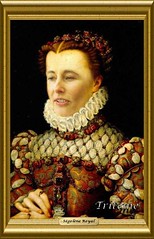


Picture: e-diote.


Mme Royal did manage to turn to her eventual advantage one tax issue - her own eligibility for France's notorious wealth tax, with a tendency to hit people who are not wealthy at all that Richard of Orléans has used this blog to explain well.

She gave figures, spoke of transparency and made it look as if disreputable people from Sarko's centre-Right UMP party had been engaged in dirty tricks about her private affairs in an attempt to smear her.

Actually, she used that word racaille that got Sarko into trouble at the start of the 2005 French riots.

The BBC went for the harshest definitions - thugs, scum, filth - which rather overlooked the fact that the word can also mean rabble and is commonly used as such by parents to children and children to other children.

All that matters, of course, is how the target of the term takes it and I am not sure if that is yet recorded.

All in all, Ségo might have emerged smiling from a potentially damaging episode had it not been for three others.

First she had been called upon to slap down her partner, François Hollande, general secretary of the party and routinely portrayed by cartoonists as the henpecked man indoors, when he came out with some contentious thoughts on income tax.

Conservatives seized on the dispute with glee, claiming that the socialist mask had been allowed to slip.

Then Le Monde printed unwelcome details of a party summit behind closed doors at which a defensive Ségo had to justify her low-key, let's appeal to the grass roots sort of campaigning style.

A member had deliberately telephoned a reporter and left the call connected throughout the exchanges.

Worst of all, Ségo has now taken the extraordinary step, for a candidate entering a presidential campaign that appears neck-and-neck, of suspending her spokesman Arnaud Montebourg, a familar face at a time when she needs as many as possible batting for her.

His crime? To say on television: "Ségolène Royal has only one flaw. It's her partner."

M Montebourg says it was a joke. His famously bossy boss said he had been given a well-deserved yellow card, sin-binned for a month. Either way - sense of humour breakdown or poor choice of close aide - the outcome reflects badly on her.

At least, as I began by suggesting, she has packed all these troubles into the same uncomfortable spell.

But she needs a good, swift recovery. How she performs during the rest of these early stages of the campaign may yet prove significant for the many voters whose minds are there to be changed.

Labels: , , , , , , , , , , , ,

January 15, 2007

The socialist guru among Sarko's new best friends

French socialists were choking on their coffee and croissants this morning as they took in the small print of Nicolas Sarkozy's speech at the Porte de Versailles shindig launching him as the centre-Right presidential candidate.


Image: lfone.


If the trouble with French streets is that too many of them are named after Jean Jaurès, as a character remarked in the 1970s Gérard Depardieu film Maitresse, the trouble with Jaurès is that his admirers now apparently include Sarko.

François Hollande, general secretary of the Parti Socialiste and the father of Ségolène Royal's children, thinks the old lefty must be rattling round in the grave to which an assassin consigned him on the eve of France's entry into the First World War.

Hollande did not need to complete his own indignant riposte: "Pauvres Jaurès! If only he had known that one day his name would be cited at a conference of the French Right......."

I dread to think what some of those Right-wing tubthumpers who champion Sarko so enthusiatically would make of his soft spot for Jaurès.

This, after all, was the man who helped create the party of Hollande and Ségo, founded what became France's Communist paper L'Humanité and opposed the Great War (it was his pacifistic objections to the conflict that got him killed).

But let us not forget Margaret Thatcher on the steps of 10 Downing Street, marking her arrival as Prime Minister by adopting the words of St Francis of Assisi.

"Where there is discord, may we bring harmony," she declared. "Where there is error, may we bring truth. Where there is doubt, may we bring faith. And where there is despair, may we bring hope."

Others were to assess quite harshly how much harmony, truth, faith and hope Maggie and her ministers brought, for example, to east Durham and South Wales.

Hollande may regard Sarko as having misappropriated the heritage of a French socialist hero. The Left-of-centre Libération took a slightly kinder view.

"Can a man who invokes Jaurès, Hugo, Mandel and Zola be wholly bad?" the paper asked. "Can a man who wants an irreproachable democracy be accused of rampant Le Pen-ism? Is a man who talks at length about the rights of the badly housed and the welfare of others be described as ultra-liberal?"

While conceding that there was much of the "well-known Sarkozy cynicism" in all this, the Libé editorialist was gracious enough to conclude that for all that could be said to Sarko's detriment, he had produced an impressive performance.

Over to you Ségo.

Labels: , , , , , , , , , , , ,

January 10, 2007

Elysée election: early result

And the new president of France is Ségolène Royal.


Photograph by: PS Clichy sous Bois.


Don't just listen to me. Ségo's election in May, it seems, is the logical extension of claims by Jean-Marie Le Pen, leader of the far-Right Front National, that he will again make it through to the final round of the race - to face her in the deciding poll.

You would have to take a very dim view of the French to believe that given such a choice, more than a small minority of them would vote for Le Pen.

He naturally takes a different view. And there is some evidence that the opinion polls, which currently give his party only 15-17 per cent of popular support, consistently under-estimate his electoral pull.

But can Le Pen really hope to split the centre-Right vote to such an extent that Nicolas Sarkozy is eliminated in the first round as the socialist candidate Lionel Jospin was in 2002?

As a foreign observer of French politics who identified the presidential potential of Mme Royal some time before most, I am naturally pleased to see my instincts being vindicated.

She has a lead in the national polls, at least on first round voting intentions, and so far seems capable of making light of perceived weaknesses and gaffes.

With her radical - and, says the centre-Right, unworkable - ideas for helping the SDFs (France's great army of homeless people who have been turned into an early election issue), she has even begun to sound a little more Left wing.

This will satisfy some of the doubters in her own Parti Socialiste, who worried about her penchant for New Labour tactics with a French accent, appealing to middle France voters just as Tony Blair once offered olive branches to middle England.

And she has also managed to sound a little more Chiracien, with her echoes during her visit to China of his mantra that the world needs counterbalances to American superpower dominance. This, in turn, will please parts of la France profonde that still approve of the kind of France Jacques Chirac represents, if not of the man himself.

I loved that quote spotted by one of my readers, Richard of Orléans, to the effect that it was a big mistake to think of her as nice but unintelligent when she was in reality highly intelligent but not very nice.

But it won't harm her; in the end, I suspect a lot of French people sympathise with her riposte that what critics see as faults in her - her steeliness and ambition -would be considered virtues in a man.

If I am determined to rule out Le Pen's chances of bringing everlasting shame to France by reaching the Elysée, I am not wavering in my belief that M Sarkozy remains a massive obstacle to Mme Royal (and, of course, to M Le Pen's unappealing prediction).

Sarko will be formally installed as the UMP candidate this weekend and we will then see his campaign enter a much more urgent phase.

He is more than a match for Mme Royal in political debate, though his own female supporters have already urged him to avoid being seen as macho and sexist in his clashes with her.

When he talks about immigration and crime, and backs his words with firm action, he clearly impresses large numbers of voters and speaks their language.

Across the south of France from Marseilles to the Italian border, a new poll suggests, he is way ahead of both the socialists and Le Pen.

Questions have been asked this week about his dual role, candidate and minister (not forgetting that as well as being interior minister, the equivalent of the British Home Secretary, he is No 2 to Dominique de Villepin in government).

But he can be expected to stand down soon as France No 1 Cop - that's how the press likes to describe the interior minister - to concentrate on getting into the Elysée.

De Villepin has said he will not give his formal support to Sarko, but this is no surprise. Usually, of course, they don't even seem to belong to the same party, let alone work together in the top two Cabinet roles.

Since de Villepin notoriously is not even an elected politican, the absence of an endorsement from him will inflict little or no damage on the Sarko campaign. Nor will there be much fall-out from President Chirac's constant put-downs of his interior minister's more robust approach to solving France's problems.

But what of M Chirac's own immediate plans? Until quite recently, he was widely seen as an elderly man going through the motions of seeing out his final months of presidency, moreover a presidency judged by most to have been an abject failure.

In his New Year messages, however, he has taken to making what sound very much like declarations of intent for a further five-year mandate. His stance on the war in Iraq has increasingly been lauded as a rare success of his time as head of state.

Surely the very idea of him standing for a third term of office remains preposterous.

Maybe. But it has been treated by some commentators and political reporters in recent weeks as if well within the bounds of possibility.

The UMP, broadly, doesn't want him, nor does the public. But can we yet be sure? Le Figaro suggested the other day that he was talking up his programme of action for France's future as if he saw himself as the man to put it into effect.

M Chirac's wife, Bernadette, enjoyed causing a bit of mischief a month or two back by suggesting that her husband might yet put himself forward again.

And she did little to discourage the speculation when she stonewalled such questions while appearing on peak time television a couple of nights ago.

If, against all logic, he does stand, what banner will he choose? Since Sarko will be the official UMP choice, we could be looking at a One Nation One People contender offering, essentially, more of the same at just the time when France arguably needs something quite different.

Mme Chi-Chi can't or won't say. After insisting, implausibly, that such matters are simply not discussed between husband and wife, she added that Jacques would not even inform her of his decision until the eve of his eventual announcement.

What if he said he was going for it? Could such a step be sufficiently divisive of conservative voters to make the first part of M Le Pen's analysis come true?

Labels: , , , , , , , , , , , , ,

November 30, 2006

The way to treat a lady


Even as Nicolas Sarkozy formally announces what everyone has known for years - that he intends to stand for the French presidency - an eye-catching trip by Ségolène Royal to the Middle East threatens to steal his thunder.

Sarko undeniably represents a formidable obstacle to Mme Royal's hopes of becoming the first female president.

But just how formidable is becoming increasingly tricky to gauge as the Ségo phenomenon continues to achieve the improbable - making French politics interesting outside France in what is still a non-election year.

International attention packs little electoral muscle, of course. Yet even that works both ways; a lot of the overseas support for Sarko tends to come from the sort of conservatives from whom millions of French voters would run a kilometre or two.

At home, Sarko plainly has work to do, and an illuminating vox pop in Le Figaro offers a little advice on how he should treat a lady when that lady stands between him and the Elysée.

The paper canvassed the views of several prominent females from the party and the responses revealed hints of anxiety that M Sarkozy's tendency to shoot first and reflect later may cost him votes.

"Nicolas must take care not to be aggressive, but to tackle her ideas and not the person," warned Isabelle Debré, a UMP senator. "The slightest gesture could be raise charges of misogyny."

Arlette Franco, from the western Pyrénées, wanted to see more of a side to Sarko that we generally encounter only when he is having one of his marital reconciliations.

"He needs to offer reassurance, to show himself to be warm, human and interested in social questions as well as security," she said.

Another Arlette - Grosskost, from Haut-Rhin - suggested that Sarko should surround himself with more women, lighten his hard-line image and acknowledge that Mme Royal's appeal by-passed political logic.

And a Parisian MP, Martine Aurillac, went so far as to offer the sort of counsel even France's macho hommes politiques would consider patronising: "Don't launch into discussions that are too technical, statistical, complicated."

Her theme was taken up by Valérie Pécresse, spokesman for the centre-Right UMP party of which Sarko is president. Confronting a female opponent, she said, was to be engaged not in a classic clash of forces but in a clash of conviction.

"You have to address the people in very simple terms," she said, while adding loyally that Sarko understood this parfaitement.

The subtext of all this is clear enough. Sarko may be capable
of tearing Ségo apart in contentious debate, but should weigh up whether it would actually do him much good?

We know Mme Royal has so far shown little substance to go with the lashings of style, a point of view that surfaced in France long before it became a British media cliché.

It has done her little damage in the polls. One of my own human barometers of middle France opinion, a middle-aged, mid-management bank employee (and typical UMP voter) living in the provinces, summed it up quite neatly.

"You say we don't know what she stands for, that she is woolly on the main issues," he said. "I think that's part of what the French like about her. There's less to be scared of."

Sarko profits this week from a flurry of attention surrounding his announcement. But unless Ségo commits some appalling gaffe in Lebanon, Israel or the Palestinian territories, she stands a good chance of bagging at least equal airtime and headlines for the right reasons.

Adding a thought after the event, it is even possible to say that when the gaffe came - failing to slap down a Hizbollah attempt to equate Israel with the Nazis - she and her supporters performed some smart wriggling.

We should all stand by, I'd guess, for a little more evidence of Ségo steel in the coming weeks and months, and for the odd sign of a mellower Sarko.

He may have taken heed of those female colleagues already. The famous promise of "rupture" - implying a complete break with failed policies of France's recent past, however this might enrage surly unions and those desperate to cling to outdated privilege - has already been watered down.

Now, he says, it will be a "peaceful rupture".

Labels: , , , , , , , ,